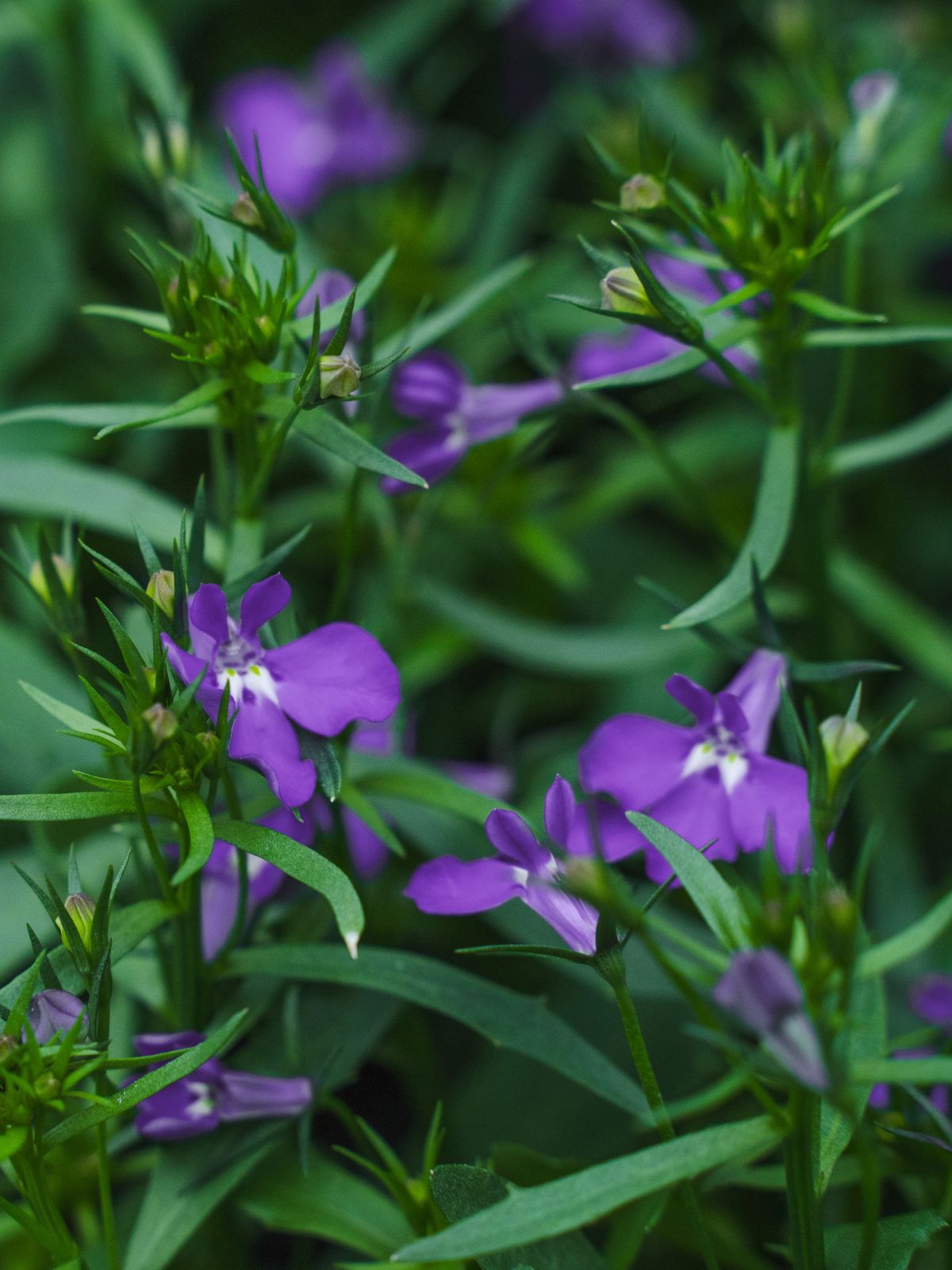




Lobelia erinus
A sea of small purple-blue flowers cascading through the garden like a gentle waterfall: that is how you instantly recognize Lobelia erinus. This elegant outdoor plant creates an airy effect and brings long-lasting colour to your garden or balcony. Grower Hofland Flowering Plants cultivates this lobelia with care, ensuring a rich and even flowering display.
This garden lobelia is used as an annual plant and is not winter hardy. The plant grows compactly and spreads beautifully, making it ideal for pots, hanging baskets and the edges of flower containers. The flowering period of this lobelia generally runs from spring until late summer. Thanks to the long flowering period and the fine foliage, a dense carpet of flowers is created that seems to move continuously in a gentle breeze.
Did you know..
Lobelia erinus is also often used as a trailing plant because the stems grow gracefully over the edge?
Caring for Lobelia
For full and long-lasting flowering, this garden lobelia requires regular care. With the right attention, the plant remains attractive throughout the summer.
- Water regularly, especially during warm weather
- Place in a bright spot in sun or partial shade
- Remove faded flowers to encourage longer flowering
- Suitable for pots and hanging baskets
- Not winter hardy and used as an annual plant
Garden Lobelia care tips
Garden lobelia likes slightly moist soil. Especially when keeping lobelia in pots, the soil can dry out quickly and the plant requires regular watering.
During warm weather, daily watering may be necessary. The soil should not dry out, as this directly affects the flowering and appearance of the plant.
Can Lobelia grow in the sun?
Lobelia grows well in the sun, provided the soil remains sufficiently moist. In full sun, extra attention to watering is important.
Can lobelia grow in the shade?
The plant also grows well in partial shade. A location with sun and light shade during the day ensures balanced growth and flowering.
Please note that too much shade can reduce flowering, while full sun requires extra watering.
Should you repot a Lobelia erinus?
No, garden lobelia is often planted directly in pots, containers or hanging baskets. Make sure the pot offers enough space for the plant to develop properly. In addition, lobelia is an annual plant, so repotting is not necessary.
Grower’s tip: In pots, it is important that excess water can drain away properly to prevent root problems.
To keep lobelia flowering for as long as possible, the plant needs regular feeding. Extra nutrients support rich and continuous flowering throughout the season.
Is Lobelia toxic?
Lobelia erinus contains substances that may be harmful if ingested by humans or animals. Contact with the plant’s sap may also cause skin irritation. It is therefore wise to be careful and, for example, wear gloves while pruning.
Pruning Lobelia
Light pruning or cutting the plant back can help maintain a compact shape and encourage a second flowering period.
What should you do with faded Lobelia flowers?
By removing faded flowers, you encourage the lobelia to produce new blooms. This visibly extends the flowering period.
How long do Lobelias flower?
Lobelia flowers for a long period, usually from spring until well after summer (October), continuously producing new flowers.
How do you keep lobelia flowering in pots all summer long?
Regular watering, adding nutrients and removing faded flowers help maintain flowering throughout the entire summer.
It is not known whether lobelia has air-purifying properties.
Garden lobelia can be sensitive to fungal diseases, especially during periods of prolonged wet weather. Overwatering or using a pot with poor drainage increases the risk of problems.
Therefore, regularly check that the soil is not too wet. If you notice affected parts of the plant, it is important to remove them immediately to limit further spread.
Lifespan of the Lobelia
The lifespan of this garden lobelia is limited to one growing season because the plant is cultivated and used as an annual.