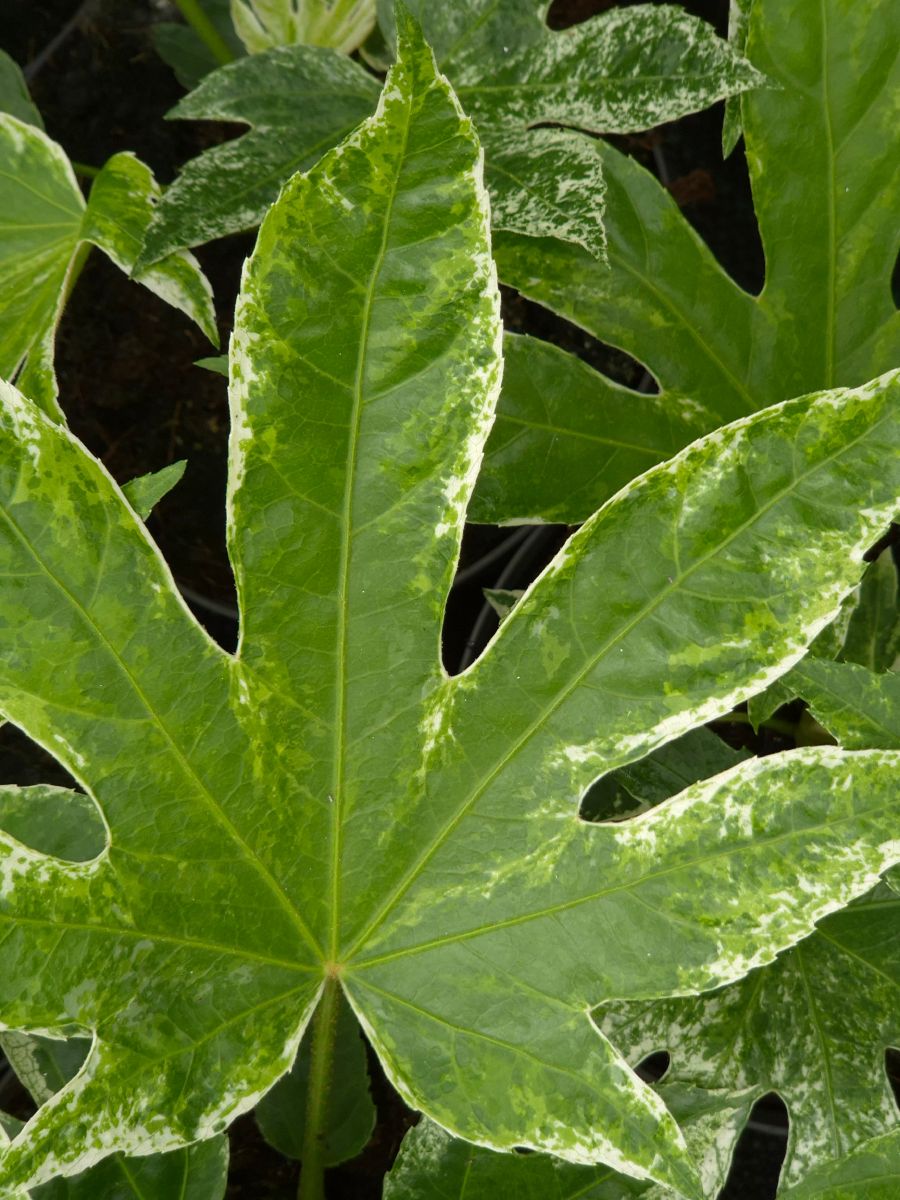




Fatsia Japonica (Japanese Aralia)
Broad, glossy fingers greeting you from the windowsill: that’s how living with a Fatsia japonica quickly feels. Those hand-shaped, deeply cut leaves are the reason it’s best known in English as the Japanese Aralia, sometimes also called the paper plant. The Fatsia japonica belongs to the Araliaceae, the ivy family, and originally comes from the forests of Japan, South Korea and Taiwan. In the wild it grows over the decades into a shrub of about four to five metres, while as a houseplant it usually stays around one and a half to two metres tall.
With its calm appearance and sturdy, leathery foliage, the Fatsia japonica is a rewarding eye-catcher for a corner with indirect light, indoors or, provided it’s sheltered from wind and frost, outside on the patio too. At Decorum, this Japanese Aralia comes from the seasonal range of grower Kwekerij Laguna.
Did you know..
Did you know the name Fatsia comes from the Japanese word “hachi”, meaning eight, referring to the number of lobes in the leaf? If you count the fingers on your own Japanese Aralia, though, you’ll more often land on seven or nine than on eight: nature doesn’t always stick to its own naming.
Fatsia japonica care
Fatsia japonica is not a demanding housemate: give it light, a steady watering rhythm, and it will keep growing with conviction for years. Our care tips in short:
- Give the Fatsia japonica a spot with bright, indirect light or light shade, never in full sun.
- Keep the potting soil lightly moist: water about once a week on average, a little more often in summer.
- Feed only during the growing season (spring and summer) with food for green houseplants.
- Note: the sap of the Japanese Aralia can irritate the skin, so wear gloves when repotting or pruning.
Fatsia japonica care tips
How much water does a Fatsia japonica need?
The Japanese Aralia drinks weekly. One watering a week keeps the potting soil of the Fatsia japonica lightly moist; in summer that can rise to twice a week, in winter you can safely stretch it to once every two weeks. Never let excess water sit in the pot or saucer, wet feet don’t suit it well and root rot is then lurking. If the soil does dry out completely at some point, submerge the root ball briefly in room-temperature water so it can soak back up.
Where should a Japanese Aralia be placed?
Light shade is its favourite spot. The Fatsia japonica feels most at home in a place with bright, indirect light or in light shade; too much harsh afternoon sun on the leaves can cause discolouration and damage. Indoors, the Japanese Aralia is a well-liked houseplant that also does fine in a spot with a bit less light, although it grows somewhat slower there.
Can a Japanese Aralia also stand outside?
Outside is possible, provided it’s well sheltered. The Japanese Aralia does fine outdoors in light shade, as long as it’s out of the wind and not exposed to hard frost. A well-established Fatsia japonica tolerates temperatures down to around -10 to -15°C in a sheltered spot; in severe cold the leaves may temporarily droop, but it usually recovers from that quickly.
When should you repot a Fatsia japonica?
Once every two years is usually enough. Repot the Fatsia japonica at purchase, in spring, or as soon as the pot is completely full of roots, into a new pot about twenty percent larger. Fresh potting soil with good drainage gives the Japanese Aralia room to keep growing healthily, and during this active period it recovers fastest from any root damage.
Does a Japanese Aralia need feeding?
Only in spring and summer. Give the Japanese Aralia food for green houseplants during its growing season and simply skip autumn and winter. During that resting period, the Fatsia japonica needs little extra.
Is a Fatsia japonica toxic?
The Fatsia is not toxic to pets. Contact with the plant’s sap can cause skin irritation, especially for sensitive skin, so it’s best to wear gloves when repotting or pruning. The berries are sometimes advised against for pets as a precaution, and with small children, as with most houseplants, it’s wise to prevent them from eating plant parts anyway.
Do I need to prune my Fatsia japonica?
It’s not necessary. Pruning the Japanese Aralia is certainly allowed, especially in spring: cut long, bare shoots back to just above a leaf or side branch, this keeps the Fatsia japonica compact and encourages new growth. Feel free to wear gloves for this, here too the sap can irritate the skin.
Does a Japanese Aralia flower?
Rarely indoors, but it can happen. A mature Fatsia japonica usually flowers in autumn with small, creamy white flower umbels that stand out beautifully against the dark leaves. Small dark berries sometimes follow the flowering, giving the Japanese Aralia some extra ornamental value.
Is a Japanese Aralia air purifying?
Partly, yes: the Japanese Aralia won the title Desk Plant of the Year in 2011 for its air purifying properties, thanks in part to its broad leaf surface. That makes the Fatsia japonica a great green colleague for the home, the office, or the study.
What pests can affect a Japanese Aralia?
Aphids and spider mites are the main ones to watch for. A draughty spot tends to attract aphids on the Japanese Aralia, while spider mites strike more often in dry air. Both pests can be controlled biologically or chemically; check the leaves of the Fatsia japonica regularly, so you catch an infestation early.
Characteristics of the Fatsia japonica
Is your Fatsia japonica not doing what you expected? That can happen! We’ve listed the most frequently asked questions below:
Why does a Japanese Aralia get yellow leaves?
Usually related to light or water. Harsh sun, air that’s too dry, or an irregular watering rhythm can cause yellow discolouration in the Fatsia japonica. Move the Japanese Aralia to a slightly shadier spot or adjust the watering, and new leaves will usually come in green again.
Why are my Japanese Aralia’s leaves curling?
The air is often too dry. Warm, dry indoor air, especially during the heating season, quickly makes the leaves of the Japanese Aralia curl up. A cooler spot and occasionally misting the leaves with room-temperature water helps the Fatsia japonica relax again.
Why are my Japanese Aralia’s leaves falling off?
Often simply a sign of age. Older, lower leaves are naturally shed by the Japanese Aralia, that’s no reason for concern. If an excessive number of leaves fall, the Fatsia japonica is probably too dry or in too low humidity; watering and misting a bit more often usually resolves that quickly.
Why are my Japanese Aralia’s leaves hanging limp?
In frost it droops temporarily. After exposure to severe cold or a cold draught, the leaves of the Japanese Aralia can hang limp for a while, a kind of temporary defence mechanism. Once the temperature rises, the Fatsia japonica usually perks back up on its own; only prolonged, hard frost can cause lasting damage.
Lifespan of the Fatsia japonica
With the right care, the Fatsia japonica is a long-term houseplant. It grows quietly but steadily and, provided it’s repotted regularly and placed in a suitable spot, can last for years as an evergreen ornament in the home. Outdoors in a sheltered spot, the Japanese Aralia can even grow into a full, perennial garden shrub.