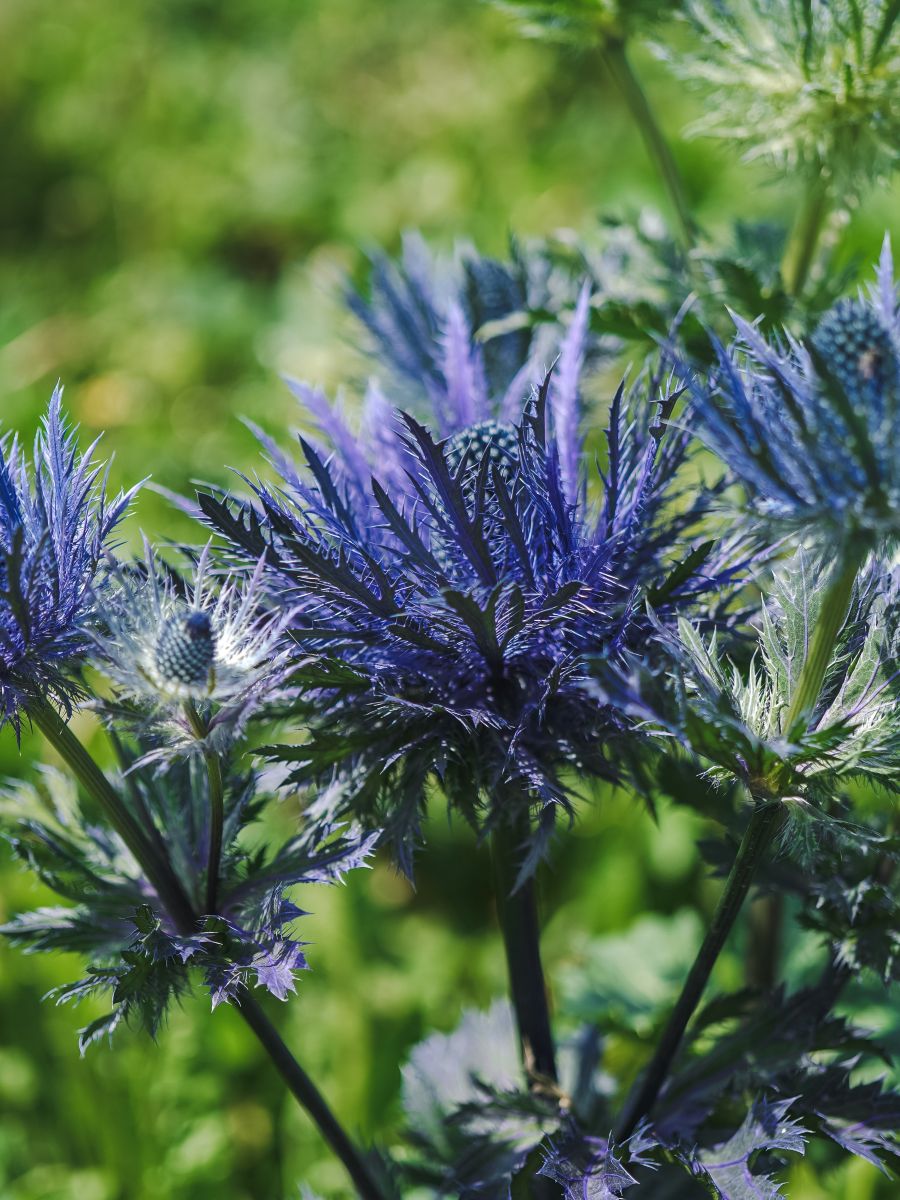




Eryngium (Sea Holly)
Tough yet refined: few cut flowers combine those two qualities as convincingly as the eryngium. This cut flower belongs to the carrot family (Apiaceae), the same plant family as fennel and dill, a relation you’d hardly guess from its striking appearance. The botanical name Eryngium comes from Ancient Greek and covers a genus of around 230 species found in temperate regions worldwide, with the greatest diversity in Mexico, Brazil and Argentina. In English this flower is also known as sea holly, thanks to its spiky appearance and characteristic shades ranging from steel blue to deep purple-blue.
As a cut flower, the sturdy stems grow 40 to 70 cm long, with the round flower heads surrounded by a collar of pointed bracts. Ideal for large arrangements and bouquets.
Decorum’s eryngium comes from grower Kroon Flowers. This family business in Abbenes has been active in ornamental horticulture for over 100 years and has fully specialised in growing eryngium in recent years. Owner Martien offers three exclusive varieties: Eryngium ‘Lovely White Green’, Eryngium zabelii ‘Donard Variety’ (known for its intensely blue colour) and Eryngium ‘Blue Lagoon’.
Did you know..
For centuries the thistle has stood as a symbol of resilience and longevity: the combination of a soft flower core and spiky leaves reflects the alternation of beautiful and difficult moments in life. Historically, the thistle was also used as a medicinal herb, among other things for skin complaints, coughs and infections.
Eryngium care
Sea holly is an excellent cut flower: with good care it stays beautiful in the vase for up to 14 days, and afterwards it even dries beautifully. The care tips in short:
- Cut the stems at an angle with a sharp knife, preferably under running water.
- Remove any leaves that fall below the waterline to prevent rot.
- Use a clean vase with tap water and add flower food.
- Note: don’t place the vase in direct sunlight, near heating, in a draught, or near a fruit bowl.
Eryngium care tips
How do you cut the stem of an eryngium?
At an angle, with a sharp knife: that’s how sea holly takes up water best. Preferably cut the stem under running water, so no air bubble enters the stem channel and blocks water uptake. Cut at least a centimetre off the stem so you reach fresh tissue. Repeat this every two to three days when you refresh the water.
Which leaves should you remove from an eryngium?
Remove all leaves that hang below the waterline. Leaves in the water rot quickly and cause bacterial growth, which shortens the sea holly’s vase life. Leave the spiky bracts around the flower heads in place: they’re actually part of the decorative effect. When removing leaves, watch out for the sharp edge spines; a firm grip with a towel or gloves works best.
How much water does an eryngium need in the vase?
Plain tap water is enough, topped up with flower food. Fully refresh the water every two to three days to prevent bacterial growth, and top up the vase in between if the level drops. Sea holly isn’t a thirsty flower, but drying out is fatal: make sure the stems always stand in water.
Which flower food should you use for eryngium?
Use a standard flower food from the shop or garden centre. Its three-part action (sugar as nourishment, an anti-bacterial agent, and acidity control for better water uptake) keeps the vase water clear for longer and the sea holly fresher for longer. Add the food every time you change the water.
Where’s the best place to put an eryngium?
In a cool, bright spot, but not in direct sunlight. Heat sources such as a radiator or a sunny windowsill speed up the drying out of the flower heads. Draughts and the nearby presence of ripening fruit (which releases ethylene) also shorten its vase life. A stable temperature between 16 and 20°C is ideal. Want to dry the sea holly? Cut it just as the flower heads are fully open and hang the stems upside down in a dry, dark place. That way it keeps its colour and shape for months.
Which vase suits the eryngium?
A glass vase is preferable: you can immediately see when the water turns cloudy or the level drops, and glass holds onto fewer bacteria than porous materials. Choose a vase that’s tall enough for the long stems (at least a third of the stem length should sit underwater). Don’t use metal vases: metal reacts with flower food and can release harmful substances. Eryngium looks beautiful on its own in a slender vase, but also combines effortlessly with roses, carnations or ornamental grasses for a lush arrangement.
Is eryngium toxic to people or pets?
Eryngium doesn’t appear on the ASPCA’s toxicity list and is described by several sources as non-toxic to people, dogs and cats. That’s good news for households with curious pets. The spiky leaf edges are sharp, though: keep the flower out of reach of small children and animals, not because of toxicity, but because of the prick. Not sure about a specific situation? Get in touch with your vet.
Visible characteristics of the Eryngium
Is your Eryngium not doing what you expected? Unfortunately, that can happen! We’ve listed the most common visual characteristics below:
Why are the stems of my eryngium drooping?
Drooping stems almost always point to disrupted water uptake. First check whether the stems are cleanly cut and that no leaves are hanging in the water and rotting. Cut the bottom of the stem at an angle again (preferably under water) and place the sea holly in a clean vase with fresh water and flower food. In many cases it perks back up within an hour or two.
Why are the flower heads of my eryngium turning from blue to brown?
Browning is a normal part of ageing, but it happens sooner with too much heat or direct sunlight. Is the vase standing near a radiator or on a sunny windowsill? Move the sea holly to a cooler, brighter spot without direct sun. Note: sometimes this is simply a sign the flowers are ready to be dried. Hang them upside down at the right moment and they’ll stay beautiful for months.
Why are the stems of my eryngium rotting in the vase?
Rotting is caused by bacterial growth in the vase water, often because leaves or organic material are hanging in the water. Always remove all leaves below the waterline, replace the water every two to three days and thoroughly clean the vase each time. Cloudy water is an early warning sign, catch it before the stem turns soft.
Why does the water in the vase turn cloudy quickly with eryngium?
Cloudy water is a sign of bacterial build-up. This happens faster if plant material is hanging in the water, the vase hasn’t been cleaned properly, or the water hasn’t been refreshed for too long. Wash the vase thoroughly with hot water and a drop of washing-up liquid every time you change the water, rinse well, and always use flower food. A glass vase helps: you immediately see when the water turns.
Why are the bracts around the flower heads falling off?
The spiky bracts around the flower head can fall off when the sea holly dries out or gets too old. This is a sign the flower has had its best days. Make sure there’s enough water and a cool spot to slow this down. Want to keep it longer? Then this is exactly the moment to dry the eryngium before it dries out further.
Vase life of Eryngium
With good care, eryngium stays beautiful in the vase for up to 14 days. That’s long for a cut flower, and it’s exactly what makes it so popular with florists and home decorators.
Want to enjoy sea holly for even longer?
Cut it just as the flower heads are fully open, hang the stems upside down in a dry, dark place, and let it dry. Dried eryngium effortlessly keeps its shape and colour for several months.