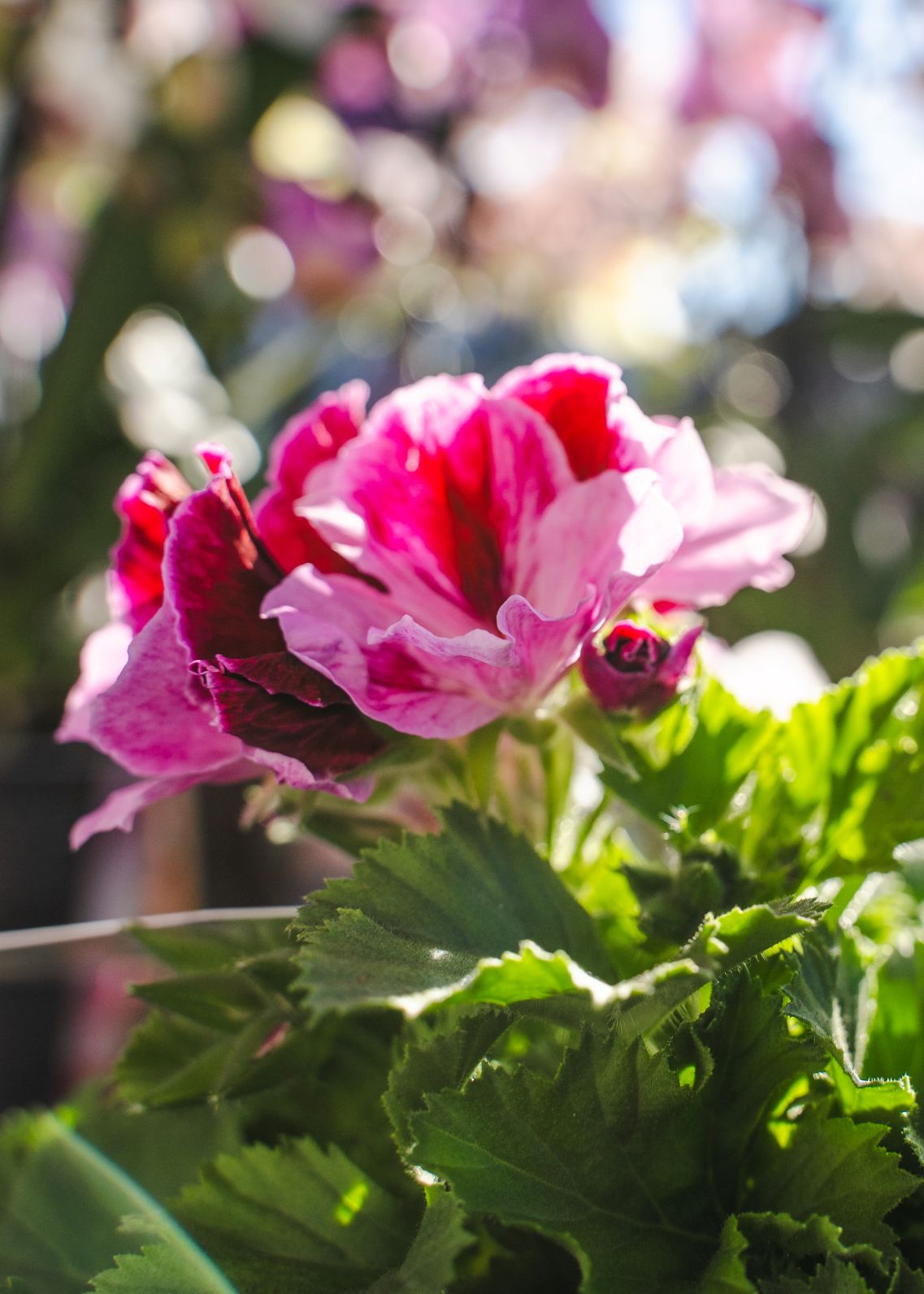




Pelargonium grandiflorum
The Pelargonium grandiflorum is an elegant and eye-catching bloomer that instantly adds atmosphere to your balcony or terrace. This plant is known for its large, colorful flowers and is often chosen for its graceful appearance. At grower Bernhard Patio, this plant is carefully cultivated for abundant flowering and strong quality.
The Pelargonium has a more refined look than the well-known balcony geranium and is often seen as a more sophisticated variety. Thanks to its rich flowering and compact growth, it is a popular choice for pots and containers. Keep in mind that this plant requires different care than the standard geranium.
With the right attention, you can enjoy this special plant for a long time.
Did you know…
The Pelargonium grandiflorum originally comes from South Africa, from where it was brought to Europe by ships in the early seventeenth century?
Pelargonium grandiflorum care
The Pelargonium requires targeted care to bloom optimally. Below are the main points to consider.
- Water the plant twice a week, but prevent the roots from staying too wet
- Place the Pelargonium grandiflorum in a bright spot, but avoid intense midday sun
- Remove faded flowers to encourage new blooms
- Protect the plant from cold, as it is not frost hardy
- Overwinter the plant frost-free if you want to enjoy it longer
Pelargonium caretips
The Pelargonium grandiflorum likes regular watering (twice a week), but does not tolerate wet roots. Allow the soil to dry slightly between waterings to prevent root rot.
Grower’s tip: Do not pour water on the leaves, but directly onto the soil. This helps prevent fungal issues in the plant.
Can a Pelargonium be placed in full sun?
The Pelargonium prefers a bright location, but not in strong, direct midday sun. Too much sun can reduce flowering and damage the plant. A spot with plenty of light and some shelter works best. This plant definitely does not like night frost.
After winter, gradually let the Pelargonium grandiflorum adjust to more warmth and light. Once the temperature does not drop below 10°C, it can be placed outside.
Should a Pelargonium be repotted?
Every spring you can repot the Pelargonium. Place it in fresh potting soil, add some fertilizer, and remove dead shoots to stimulate growth.
When should the Pelargonium be fed?
Pelargonium grandiflorum should be fed weekly during their flowering period (March to September). Preferably use a liquid fertilizer so you can mix it with the watering water.
Grower’s tip: Worried you might forget to feed your Pelargonium? Choose slow-release fertilizers that last for several weeks or even months. It is best to add this when repotting the plant.
Is the Pelargonium grandiflorum toxic?
No, the Pelargonium grandiflorum is not a toxic plant.
How do you prune a Pelargonium?
Removing faded flowers helps extend the blooming period and keeps the plant looking neat.
After its flowering period (March to September), you can prune the Pelargonium back to about 10 centimeters.
How long does the Pelargonium bloom?
The Pelargonium blooms abundantly in spring and summer, from March through September. During this period, you can remove faded flowers to stimulate the growth of new blooms.
It is not known whether the Pelargonium has air-purifying properties.
Although the Pelargonium is a robust plant and can take some impact, it is still susceptible to diseases and pests. In addition to root rot, often caused by overwatering, the Pelargonium may be affected by the following:
Aphids
The most common pest is aphids. These insects, as well as whiteflies, suck sap from the leaves of your plant.
Aphids can be recognized by the large numbers of small black insects gathering on the soft parts of your plant. Whiteflies are small white insects that settle on the underside of the leaves.
Botrytis Cinera
Botrytis cinerea is a common disease in the Pelargonium. This disease, also known as grey mold, can be recognized by soft, brown areas on leaves, flowers, and stems.
Control this by removing the affected parts. Removing yellow leaves and faded flowers also helps prevent this fungal disease.
Rust
Rust is another fungus that can affect the Pelargonium. This fungus can be recognized by small, round, orange-brown pustules that usually form on the underside of the leaves. Yellow spots may be visible on the upper side of the leaf.
Remove affected leaves to prevent further spread.
Appearance characteristics of the Pelargonium
Is your Pelargonium grandiflorum not performing as you expected? That can happen! Every plant has its own unique needs, so care is not always straightforward. We have listed the most frequently asked questions for you below:
The Pelargonium has yellow leaves
Lifespan of the Pelargonium
The Pelargonium is an annual plant. However, if you care for it properly (pruning back and overwintering in a place where the temperature is at least 10°C), it can bloom again in spring.