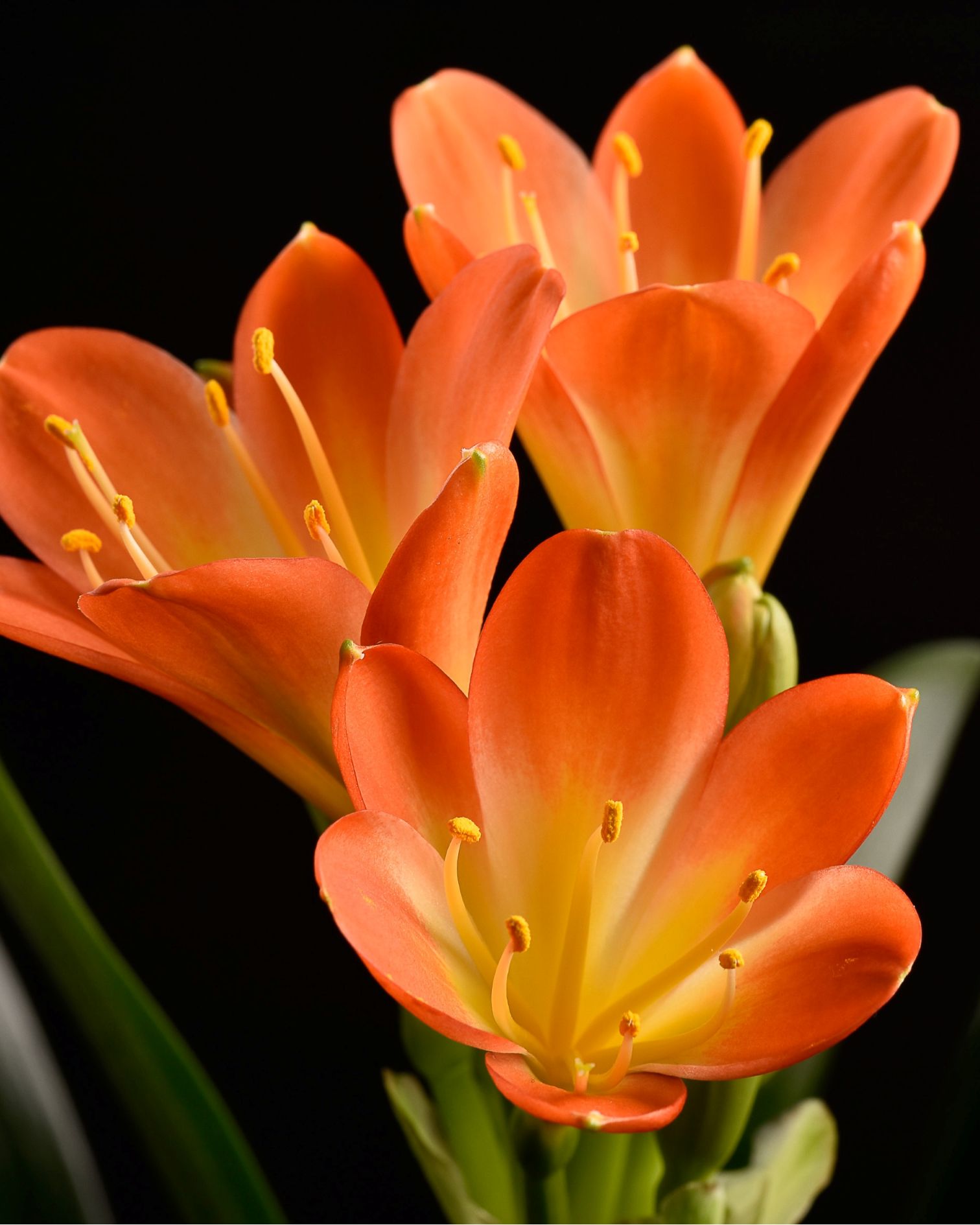




Clivia (Bush Lily)
The Clivia, also known as the Bush Lily, is a flowering houseplant with sturdy, dark green leaves and striking flower umbels. The name Clivia refers to Lady Charlotte Florentine Clive, Duchess of Northumberland, on whose estate in Almwick this plant was cultivated in the nineteenth century. During this period, the plant gained popularity as a houseplant in Belgium and England, after which it later spread to other European countries.
Originally, the Clivia Miniata grows in South Africa, where it develops in light shade and sheltered conditions. The most well-known Clivia is the orange-flowered variety, immediately recognizable for its bright color and compact bloom structure. Botanically, the Bush Lily belongs to the Amaryllidaceae family and is related to the Amaryllis, also known as Hippeastrum. Both the foliage and the flower shape show clear similarities to this related plant.
Within the FlorAmor assortment, the Clivia Miniata is cultivated with attention to quality, natural growth, and uniform plant structure. With its calm appearance, long lifespan, and reliable flowering, this plant is widely suitable for living and working spaces.
Clivia Miniata care
The Clivia is a distinctive houseplant with sturdy leaves and striking flowers in warm shades. This plant is known for its long lifespan and, with proper care, can last more than ten years. With its calm appearance and clear flowering period, the Clivia adapts well indoors. Below are the most important care points listed clearly.
- Place the Clivia in a bright location with indirect sunlight.
- Water once a week during the flowering period. In winter, once every two weeks is sufficient.
- During the growing period, feed several times a year with fertilizer for flowering houseplants.
- During its dormant period, place it in a cool spot between 5° and 12° Celsius.
Bush Lily care tips
How often should you water a Clivia?
The Clivia Miniata has moderate water needs and prefers lightly moist potting soil without standing in water. During the growing period, watering once a week is generally sufficient to keep the soil evenly moist. During winter, watering once every two weeks is enough.
During the dormant period, the Bush Lily receives less water, while the potting soil remains slightly moist and must never dry out completely.
What is the best location for a Bush Lily?
The Clivia Miniata grows best in a bright location with indirect sunlight and does not tolerate strong midday sun. A place near an east- or west-facing window suits the natural growing conditions of the Clivia well. During the dormant period, the Bush Lily preferably stands cooler, at temperatures between five and twelve degrees Celsius. This rest phase lasts about two months and supports a healthy flowering cycle.
When should I repot Clivia?
The Clivia does not need frequent repotting. In practice, repotting once every two years is sufficient, preferably after flowering. Repotting is only necessary when the roots clearly no longer have enough space. A pot that is too small can reduce the flowering of the Clivia Miniata.
Feeding for the Bush Lily
During the growing period, the Bush Lily receives fertilizer for flowering houseplants several times a year. This supports both leaf development and flower formation. During the dormant period, no fertilizer is given, allowing the Clivia Miniata to store energy for a next flowering phase.
Is the Clivia Miniata toxic?
Yes, the Clivia is toxic. The Clivia Miniata contains the substance lycorine, which can be harmful to humans and animals. Ingestion may lead to complaints such as vomiting, diarrhea, and excessive salivation. It is therefore advisable to place the Bush Lily in a safe location, especially in households with small children or pets.
Should I remove the stem where the flowers were from my Clivia?
With its striking orange flowers, the Clivia Miniata is a beautiful flowering houseplant. With proper care, you can enjoy this plant and its orange flowers for more than 10 years.
How many times does a Clivia bloom?
A Clivia generally blooms once a year. With optimal care, the plant may sometimes show a second flowering period.
How can I make my Clivia bloom again?
To bring the Bush Lily back into bloom, a clear dormant period is essential. During this phase, the plant receives less water and is placed in a cooler location between 5° and 12° Celsius.
Why is my Clivia no longer blooming?
Sometimes a Clivia Miniata skips flowering for one or more years. After this period, the plant can naturally form buds again and bloom once more.
Is the Bush Lily air purifying?
The Bush Lily contributes to a more pleasant indoor climate due to its air-purifying properties. As a result, the Clivia Miniata is not only decorative but also functional in living and working spaces.
Is the Clivia sensitive to diseases and pests?
Yes, the Clivia Miniata can be sensitive to diseases and pests. Scale insects and mealybugs are the most common pests that may affect the Bush Lily. Regularly check your Clivia and, if necessary, take measures to control the infestation and identify the cause.
Appearance characteristics of the Clivia Miniata
Is your Clivia not performing as expected? That can happen. Every plant has its own unique needs, so care is not always straightforward. We have listed the most frequently asked questions below:
The Bush Lily has yellow leaves
If your Clivia develops yellow leaves, it may mean it is receiving too much sunlight. In that case, place it near an east- or west-facing window where it is not exposed to direct sunlight.
Please note! Yellow leaves are not the same as yellow spots.
The leaves of the Clivia have yellow spots
Do you see yellow spots on the leaves of your Clivia? Then you are probably giving it water that is too cold or watering too much. Our advice is to give it lukewarm water, preferably rainwater.
Please note! Yellow spots are not the same as yellow leaves.
The flower stems of the Clivia remain short
If the flower stems of the Clivia remain short, the plant may not have received sufficient water during the development phase. With even watering during a next flowering period, the flower stems can develop normally again.
Lifespan of the Clivia
The Clivia is known for its long lifespan and, with proper care, can last more than ten years.