



Carnivorous plants
Carnivorous plants are a remarkable appearance with intriguing trap leaves and striking shapes. Plants that have adapted to nutrient-poor soils by using insects as an additional food source. In nature, these plants mainly occur in wet areas with nitrogen-poor soil, such as marshes and peatlands. Some species are widely distributed around the world, while others occur specifically in tropical regions. Due to the disappearance of their natural habitat, carnivorous plants have become increasingly rare in the wild.
A characteristic of a carnivorous plant is that it has adapted to conditions where few nutrients are available. Instead of relying solely on the soil, these plants developed various trapping mechanisms that allow them to use insects as an additional source of nutrients.
With Sarracenia, Dionaea, Drosera and Nepenthes, our grower Laguna cultivates four of the most popular carnivorous plants. These species owe their popularity to their unique appearance.
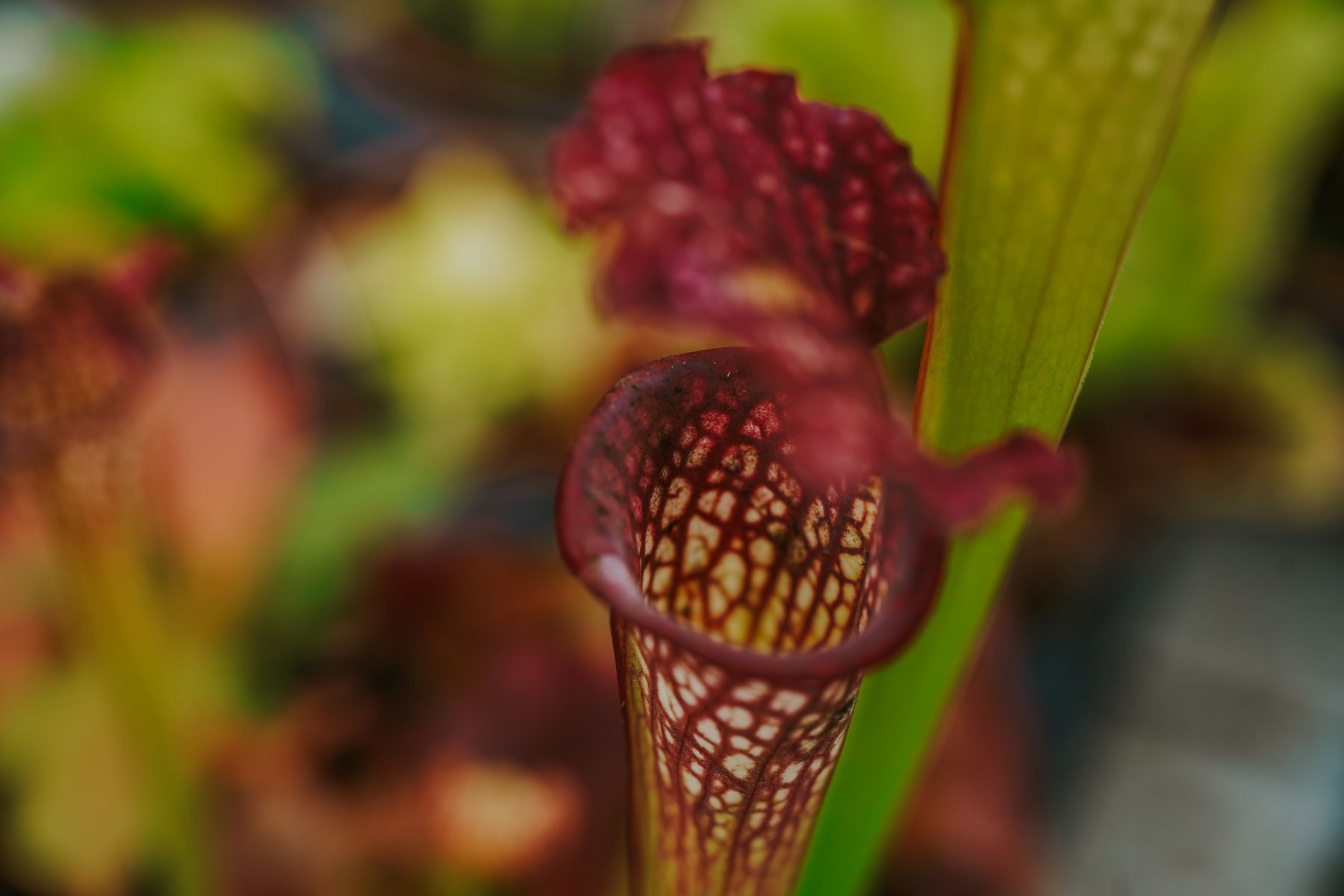
Sarracenia – Trumpet Pitchers
Sarracenia, also known as the Trumpet Pitcher Plant, originates from North America. There the plant grows in wet marshlands and open peat soils. The species forms upright, tubular pitchers in green, yellow, red and purple. Due to the height of the pitchers, Sarracenia is among the larger carnivorous plant species.
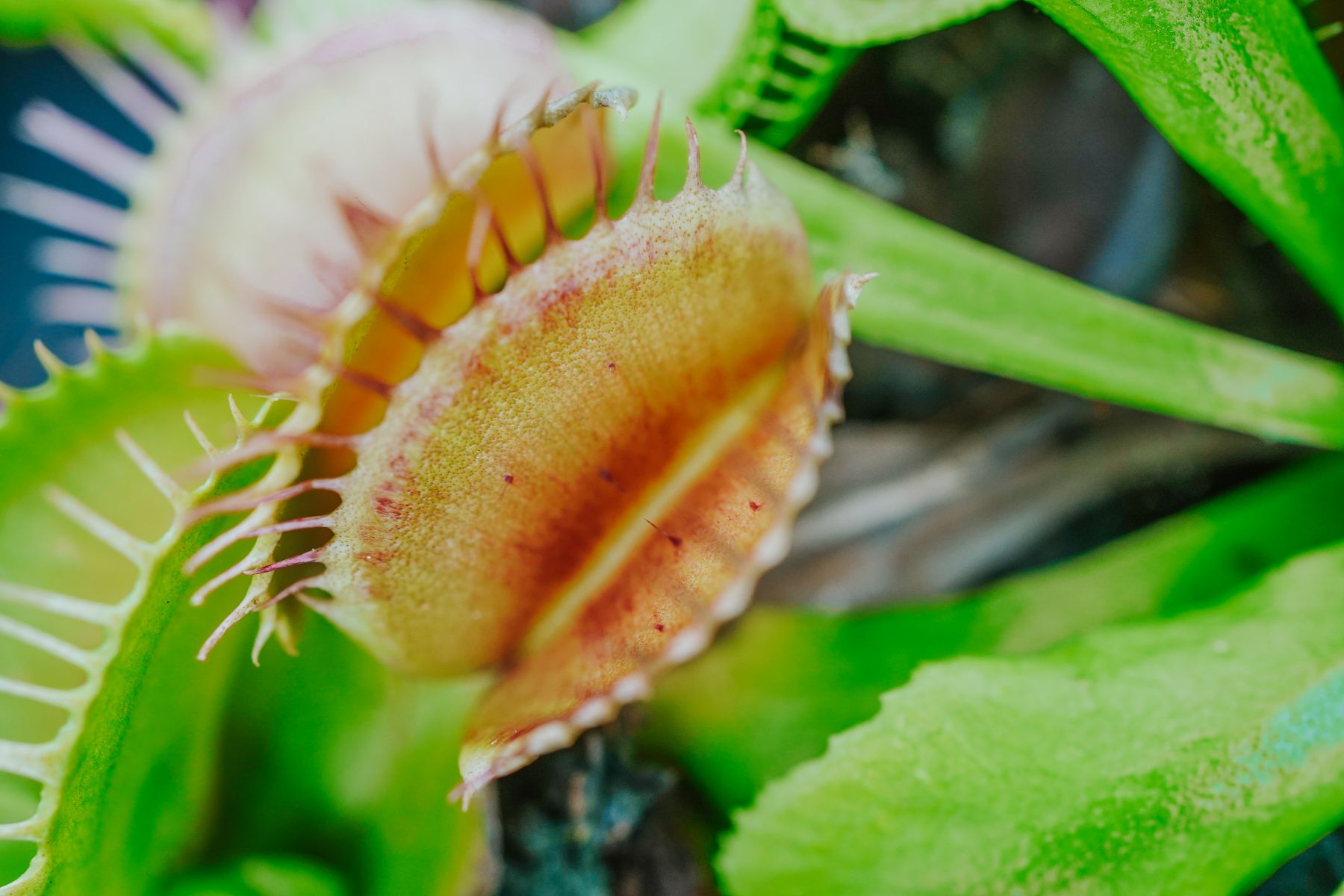
Dionaea – Venus Flytrap
Dionaea, better known as the Venus Flytrap, naturally occurs in the southeastern United States. The plant grows there in moist, nutrient-poor soils. This Venus carnivorous plant has two-part trap leaves with fine teeth along the edge that close quickly when touched.
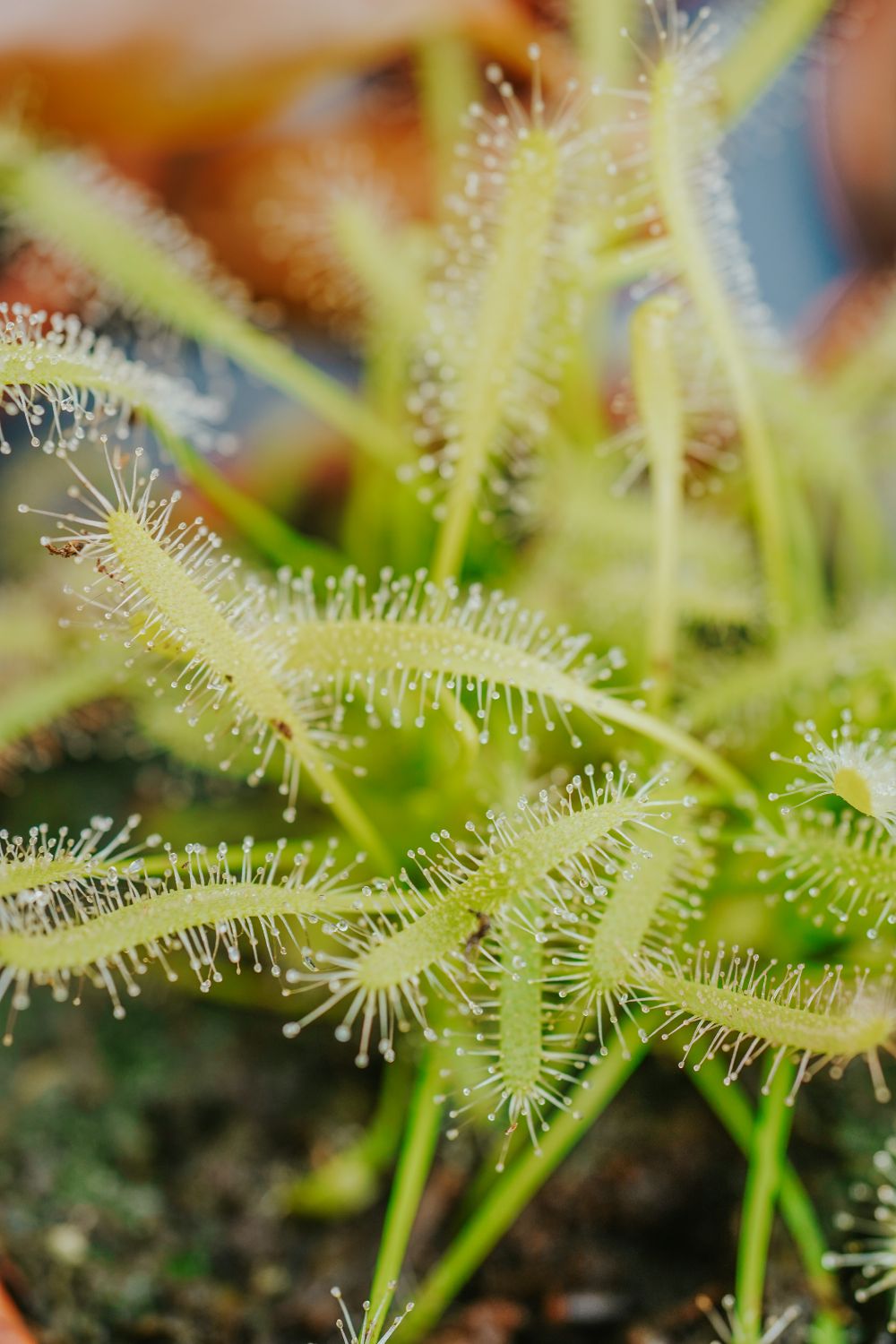
Drosera – Sundew
Drosera, also called sundew carnivorous plant, is widely distributed in Europe, North America, Asia and Australia. The plant grows in wet, acidic soils with few nutrients. The leaves carry sticky tentacles that hold small insects.
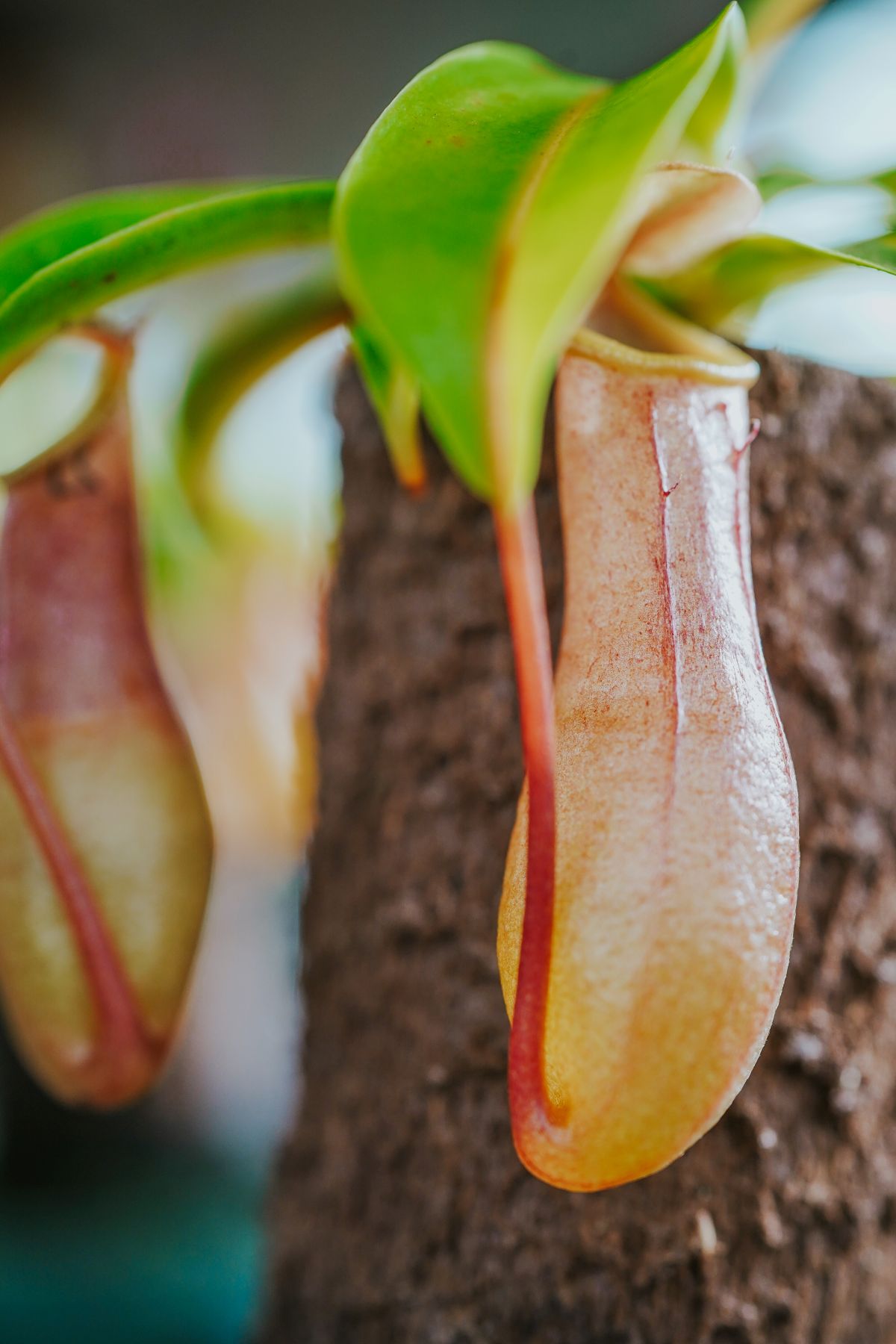
Nepenthes – Pitcher Plant
Nepenthes originates from tropical regions in Southeast Asia. The plant grows there in warm and humid conditions. This carnivorous plant forms hanging pitchers on tendrils in which insects are digested.
Did you know…
There are more than 800 species of carnivorous plants worldwide? The largest species, Nepenthes rajah, can form pitchers about 41 centimeters tall with a capacity of over 3.5 liters.
Carnivorous care tips
A carnivorous plant requires specific care to remain healthy. With the right position, water and soil type, the plant can develop well. Below are the main points.
- Place the carnivorous plant in a bright spot with sufficient sunlight.
- Use only rainwater or demineralized water.
- Keep the carnivorous plant soil constantly slightly moist.
- Do not feed, the plant obtains its nutrients from insects.
Carnivorous care
Water a carnivorous plant only with rainwater or demineralized water. Tap water contains lime and salts that can harm the roots. The soil must remain constantly slightly moist, allowing the pot to absorb water via a saucer.
Do I need to put water in the pitchers of my carnivorous plant?
Species such as Sarracenia and Nepenthes fill their pitchers themselves with liquid. It is therefore not necessary to manually pour water into the pitchers.
Where should a carnivorous plant be placed?
Preferably in a bright location with several hours of direct sunlight per day. Especially Sarracenia and Dionaea need plenty of light to develop strong traps and deep colors.
Does a carnivorous plant need a lot of light?
Sufficient light is essential for healthy growth. With too little light, the plant weakens and the trapping mechanisms function less effectively. Nepenthes grows in a bright spot without intense midday sun and is therefore suitable as an indoor carnivorous plant.
Repot a carnivorous plant in special carnivorous plant soil without added fertilizers. Regular potting soil is unsuitable because nutrients can damage the roots. Repot when the plant becomes too large or when the substrate loses its structure.
A carnivorous plant naturally grows in soils that are poor in nutrients, especially nitrogen. To compensate for this deficiency, the plant catches insects. The prey is attracted by color, nectar or scent and then held in a pitcher, on a sticky leaf or between trap leaves.
After capture, the digestion process starts. The plant breaks down the insect and absorbs the released nutrients through the leaf. These nutrients supplement the energy the plant obtains from light through photosynthesis.
What should you feed a carnivorous plant?
In most cases, a carnivorous plant catches insects itself such as flies, mosquitoes and fruit flies. Extra feeding is generally not necessary when the plant catches sufficient prey.
Can a carnivorous plant survive without insects?
A carnivorous plant can obtain energy from light through photosynthesis. Insects are a supplement to nutrients, but not a daily requirement for survival. Fertilizing via the soil is not recommended.
Are carnivorous plants toxic?
No, carnivorous plants are not toxic. They are even harmless to humans and animals. Unless you are a fly, in which case they will see you as a tasty snack😉
Removing blackened or dead leaves keeps the carnivorous plant tidy and vital.
Should I cut off the flowers of my carnivorous plant?
A carnivorous plant flower costs energy. When the plant appears weakened, removing the flower stem can support growth.
The flower of a carnivorous plant usually appears during the growing season on a long stem above the foliage. The shape differs per species and forms a natural part of the life cycle.
Do carnivorous plants purify the air?
No, carnivorous plants do not purify the air.
Why is my carnivorous plant dead?
Incorrect watering, too little light or wrong potting soil can cause damage. Root rot due to prolonged wet conditions can also lead to failure.
How do you save a dying carnivorous plant?
Check that only rainwater is used, place the plant in a brighter position and use suitable carnivorous plant soil. Some species have a winter dormancy, during which above-ground parts temporarily die back.